Methods, software and the problems that drive them.

Our interests are interdisciplinary, lying at the intersection of applied mathematics, engineering, physics and high-performance computing. Three of our themes are about how we compute: the meshes, the discretisations and the machines. Three are about what we compute with them.

How we compute

Mesh generation and adaptation

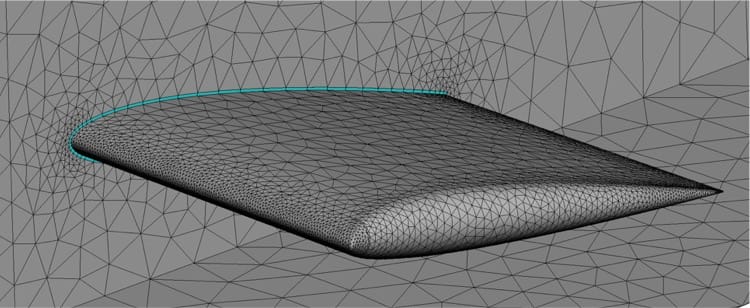
Before any simulation can run, the shape being simulated has to be broken into simpler elements. For high-order methods those elements have to curve to follow the surface, and generating them reliably is one of the largest practical obstacles to using these methods in practice.

A curved high-order mesh around a NACA0012 aerofoil

Numerical methods

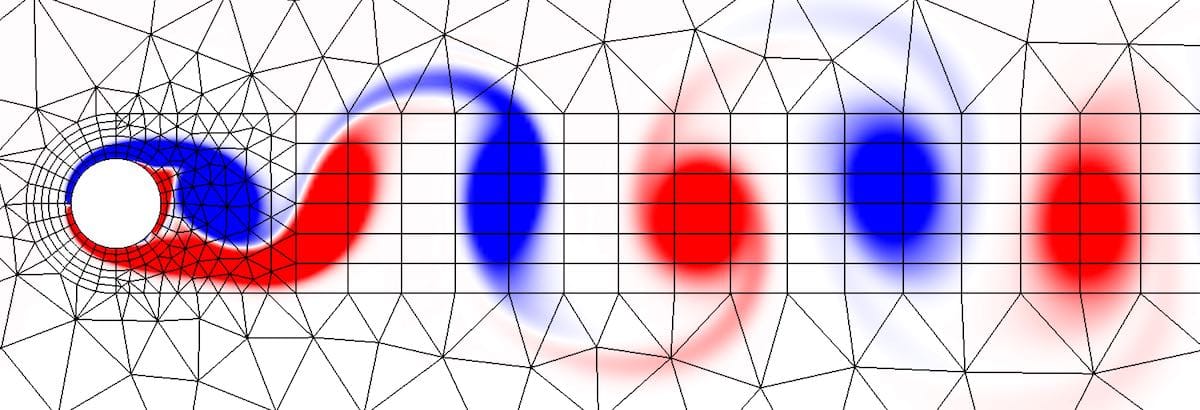
Spectral/hp element methods combine the geometric flexibility of finite elements with the accuracy of spectral methods. We work on the discretisations themselves: how to make them stable, how to place resolution where it is needed, and how to couple parts of a simulation that do not line up.

A von Kármán vortex street computed with a spectral element method

Exascale and performance

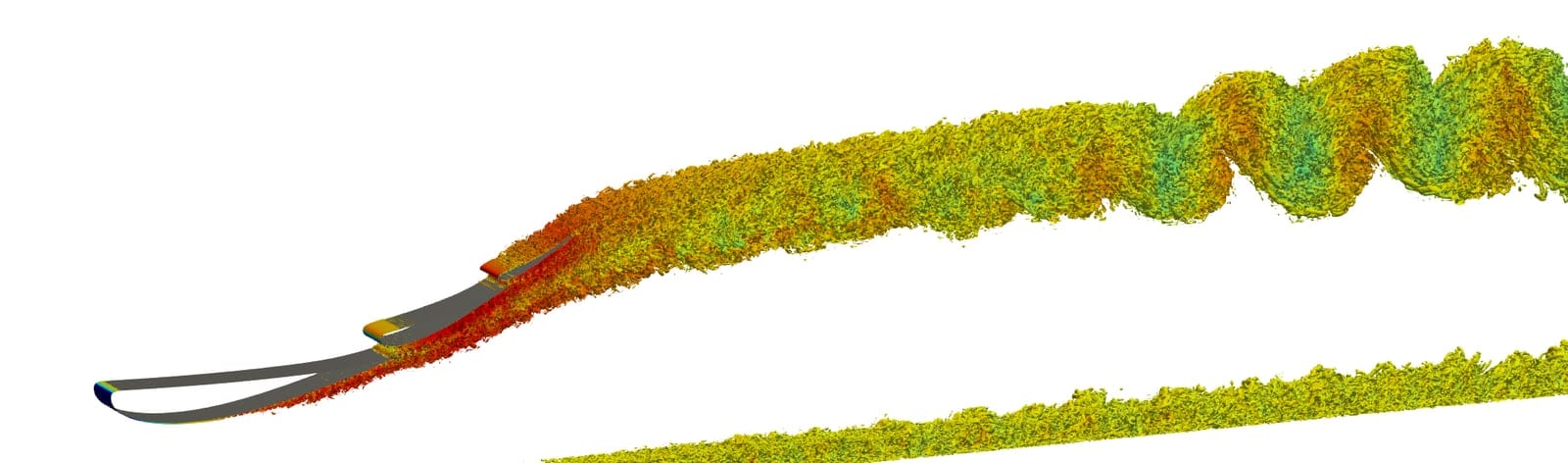
A method is only useful if it runs. We work on making high-order finite element codes fast on the machines that actually exist: many-core CPUs, GPUs, and the exascale systems being built now, where the hardware changes faster than scientific software can usually follow.

Turbulent wake developing behind a multi-element wing in a large scale-resolving simulation

What we compute

Transition and turbulence

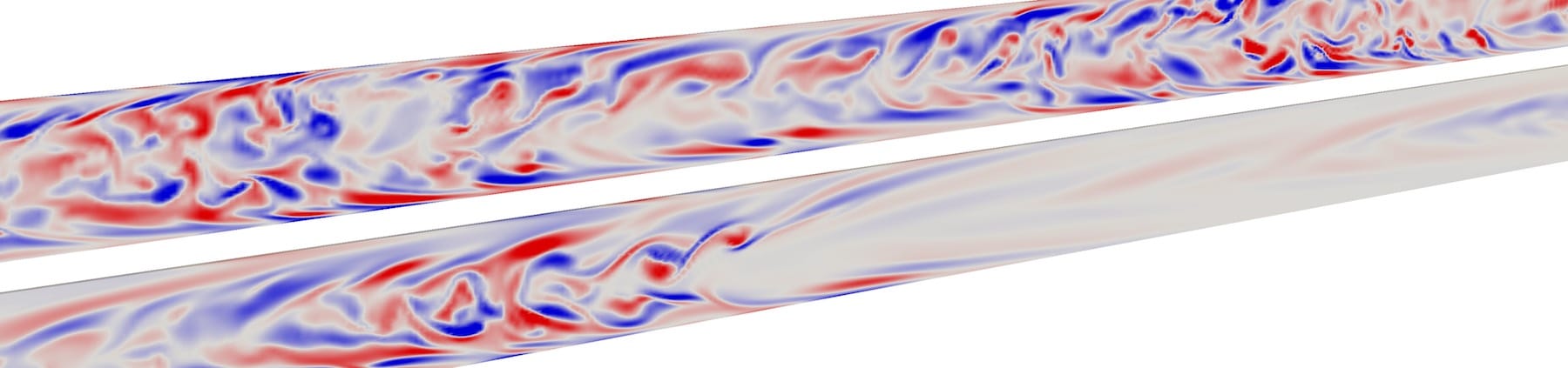
Fluids move in two basic ways: smoothly, or chaotically. How they get from one to the other is a century-old question that is still open, and it is the physics underneath most of what else we do, in ordinary fluids and in the plasma inside a fusion reactor alike.

Simulation of transitional flow in a pipe, showing alternating laminar and turbulent regions

Fusion

Building a fusion power plant means predicting what happens to a plasma hotter than the centre of the Sun, held in place by magnetic fields, in a machine that does not exist yet. We build the simulation methods and software that this design work will depend on.

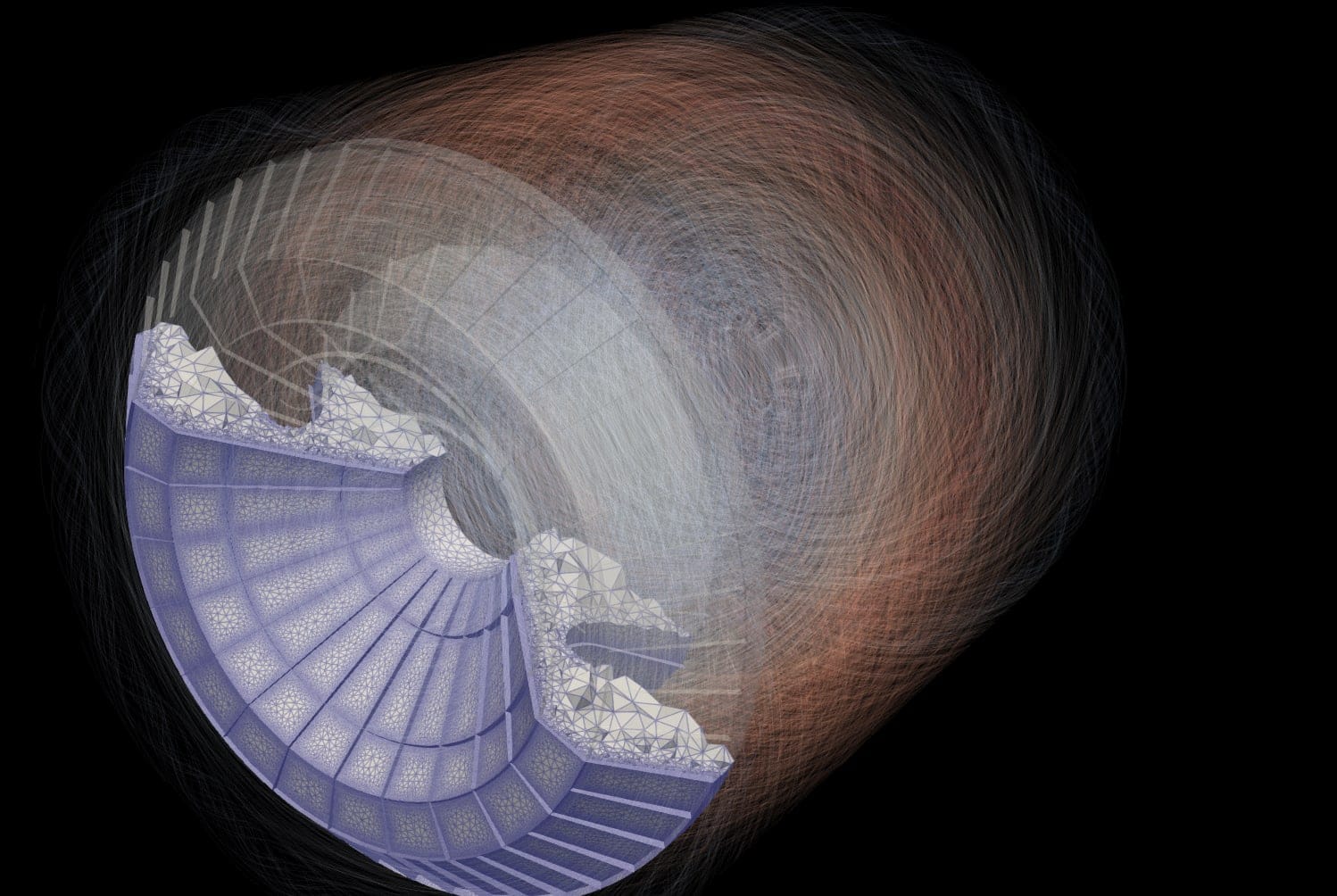
Simulation of the MAST tokamak: magnetic field lines traced over a cutaway of the reactor geometry and its mesh

Industrial aerodynamics

Methods are worth having only if they answer questions somebody actually has. We apply high-order simulation to real engineering geometries — racing cars, aircraft wings, fans — usually in cases where the standard industrial approach gives an answer that is not accurate enough to design with.

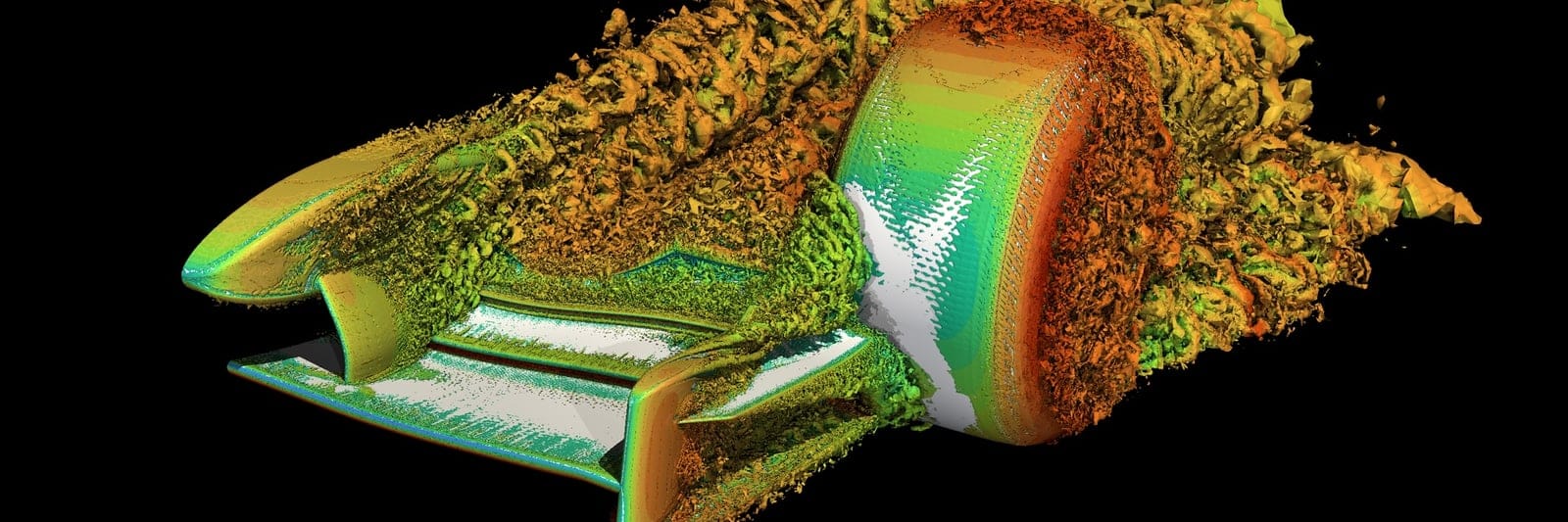
Scale-resolving simulation of a Formula One front wing and wheel, showing vortical structures shed into the wake

Funded projects

Our work is supported by the Royal Academy of Engineering, EPSRC, the UK Atomic Energy Authority and industry. Current and recent awards:

  • REMODEL

    EPSRC Programme Grant · Co-I · 2025–2030 · £7.9M (total programme)

    Advancing parallel mesh generation and geometry representation to enable industrially relevant, high-fidelity simulations

  • RAEng Research Chair

    Royal Academy of Engineering, with the UK Atomic Energy Authority · PI · 2024–2029 · £2M

    Next-generation numerical methods for high-fidelity fusion modelling

  • NekMesh for industry

    EPSRC Impact Acceleration Account · Joint PI · 2025–2026 · £48,802

    NekMesh: towards an industrial high-order mesh generation tool

  • Cryogenic liquids for net-zero aviation

    King's Climate & Sustainability seed fund · Joint PI · 2023 · £17,000

    Modelling cryogenic liquids towards net-zero aviation

  • NEPTUNE (2022)

    UK Atomic Energy Authority, ExCALIBUR · PI · 2022 · £472,454

    NEPTUNE: investigating high-order methods for nuclear fusion

  • NEPTUNE high-dimensional models

    UK Atomic Energy Authority, ExCALIBUR · Co-I · 2022 · £196,000

    NEPTUNE: high-dimensional models for fusion applications

  • Exa-UQ

    EPSRC (EP/W007886/1), ExCALIBUR · Co-I · 2021 · £1,237,384

    Exa-UQ: uncertainty quantification at the exascale

  • APinTA

    Met Office, ExCALIBUR · Co-I · 2021 · £1,152,297

    Advanced parallel-in-time algorithms for partial differential equations

  • NEPTUNE (2020)

    UK Atomic Energy Authority, ExCALIBUR · PI and Co-I · 2020 · £606,015

    NEPTUNE: investigating high-order methods for nuclear fusion

  • Torin-Sifan KTP

    Innovate UK · Co-PI · 2020–2025 · £249,870

    Knowledge Transfer Partnership with Torin-Sifan Ltd

  • ELEMENT

    EPSRC (EP/V001345/1), ExCALIBUR · Co-I · 2020 · £245,611

    ELEMENT: the exascale mesh network

  • PRISM

    EPSRC Platform Grant (EP/R029423/1) · Co-I · 2018 · £1,612,965

    PRISM: platform for research in simulation methods

  • ARCHER Leadership Project

    EPSRC · Co-I · 2015 · £165,796

  • ExaFLOW

    EU Horizon 2020 · Co-I and work package leader · 2015 · €3,312,235